One application. 19 lenders from our 50+ network. Funded in 24 to 48 hours.
Apply Now One application routed to where you qualify.
Every Apply button starts the same single application. Your chosen lender is prioritized first.


















Medical borrowing in Canada happens at two scales, and the difference between them is the most useful thing on this page.
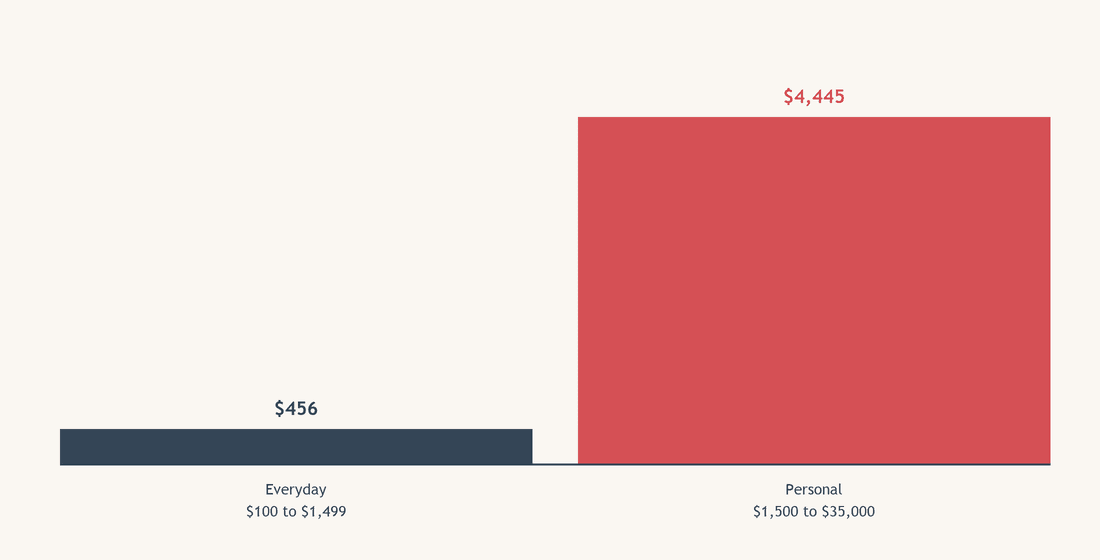
At the everyday scale, under $1,500, medical expenses were the stated purpose on 12.4% of applications on Smarter Loans from January 2026 to June 2026, averaging $456. That is a prescription not covered by a plan, a dental visit, a pair of glasses, a vet bill, an ambulance charge. It is the second most common reason to borrow small after paying off a bill.
At the personal scale, $1,500 to $35,000, medical expenses were the purpose on 5.8% of applications, averaging $4,445. That is a procedure: dental surgery, orthodontics, fertility treatment, a private MRI, a course of physiotherapy beyond what a plan covers, an elective operation.
| Scale | Share of applications | Average medical request |
|---|---|---|
| Everyday, $100 to $1,499 | 12.4% | $456 |
| Personal, $1,500 to $35,000 | 5.8% | $4,445 |
Source: Smarter Loans platform data, January 2026 to June 2026.
A tenfold gap in amount, and a different product for each. The small one is a short-term loan cleared in months; the large one is an instalment loan with a term matched to the treatment. The lenders on this page write both, and the sections below treat them separately, because a page that averages them would describe neither.
Every medical loan starts where the provincial plan stops, and knowing the line saves money before any lender is involved.
Provincial plans cover medically necessary hospital and physician services. They generally do not cover routine dental care for adults, prescription drugs outside hospital in most provinces, vision care, physiotherapy and other paramedical services beyond limited exceptions, ambulance fees in full, or anything elective. Employer plans fill some of that for those who have one; the everyday-scale figures above are what it looks like for those who do not. The Government of Canada describes how the system is organised at canada.ca, and each province publishes what its plan covers.
Before borrowing for anything above a few hundred dollars: ask the provider whether the procedure is covered in any circumstances, whether a hospital route exists with a wait instead of a fee, and whether the provider offers its own payment plan. Dental and orthodontic practices often do, at zero interest, and that beats every product on this page.
The small one. $500 over six months at 29.99% APR costs about $44 in interest. The term is the lever; the same $500 over twelve months costs nearly twice as much, and the short-term loans page sets out why a small medical bill should be a short loan.
The large one. $3,000 for dental work over twelve months at 24.99% APR is about $285 a month and about $421 in interest. A procedure with a known price is the case for an instalment loan with a fixed term; the instalment loans page covers the product, and the personal loan calculator prices any amount over any term.
The one rule that holds at both scales: borrow the quote, not the estimate. A dental treatment plan is priced per stage; borrowing for all of them at once when only the first is scheduled puts the later stages on interest before they happen.
Medical borrowing is not evenly spread. Among applicants declaring disability income, medical expenses were the stated purpose on 14.9% of applications, the highest share of any income type on our platform. A fixed income absorbs a $456 bill worst, and it is the population most often outside an employer plan. The disability loans page covers how that income is assessed.
Across everyday-scale applications generally, only 2.5% carried a good credit score; 41.3% were fair, 30.2% poor and 25.7% had no usable score. A medical bill does not wait for a score, and the lenders on this page assess deposits first. We do not record the type of treatment behind a medical application, so the split between a prescription and a procedure is inferred from the amounts rather than observed.
Nineteen lenders on this page offer personal loans from $15 to $35,000 unsecured, from 0% APR up to the 35% federal cap on instalment loans, on terms to 84 months. Ten publish funding within 24 hours, which matters for a bill due at the pharmacy counter. Income floors on this page run from $1,000 to $2,500 a month from any regular source, most commonly $1,500. Fourteen of the nineteen will consider a poor score.
Every lender here reads the file the same way: regular deposits first, what is already leaving the account second, the score last. A medical purpose is neither a plus nor a minus in that assessment; the amount and the term are what the lender prices.
You can apply, and most lenders on this page will give a decision, but a loan funded months before a procedure is interest paid on money sitting in an account. The better sequence is quote, then schedule, then loan, with the application made in the week the deposit is due. Quotes expire, treatment plans change after a second opinion, and a plan that was $3,000 in March is sometimes $1,800 in May once the covered portion is confirmed.
Two exceptions. Where a provider requires payment in full before booking, the loan has to come first, and the term should start from the payment date rather than the treatment date. And where the treatment is time-sensitive, fertility being the common case, waiting for a lower quote is not an option and the loan is simply the price of the calendar.
A second opinion is worth the fee on anything above a few thousand dollars, and not only for the medicine: a second provider often has a different payment plan, a different price, and sometimes a different view of whether the procedure is needed at all. The cheapest medical loan is the one for a treatment you were right to have.
If the bill is small and due now, the emergency loans page covers how to size it. If the procedure is elective and cosmetic, the plastic surgery loans page covers that case. All personal loan options are on the personal loans hub.
Source for all platform figures on this page: Smarter Loans personal loan applications, January 2026 to June 2026.
Reviewed by Vlad Sherbatov, Co-Founder and President, Smarter Loans. Last reviewed 9 September 2026. Platform figures cover applications from 1 January to 30 June 2026.
Yes, and on our platform it is one of the most common reasons to borrow: medical expenses were the stated purpose on 12.4% of everyday-scale applications in the first half of 2026, averaging $456, and on 5.8% of personal-scale applications, averaging $4,445. Nineteen lenders on this page offer personal loans, and fourteen consider a poor score.
Provincial plans cover medically necessary hospital and physician care. Routine adult dental care, most prescription drugs outside hospital, vision care, physiotherapy beyond limited exceptions, ambulance fees and anything elective generally fall outside them. Employer plans fill some of that gap; the everyday-scale borrowing on this page is what it looks like without one.
$500 over six months at 29.99% APR costs about $44 in interest; $3,000 over twelve months at 24.99% is about $285 a month and about $421 in interest. The term sets the cost more than the rate, so a small bill should be a short loan and a procedure should be financed over a term matched to it. Ask the provider for a payment plan first; zero-interest practice plans beat any loan.
Fourteen of the nineteen lenders on this page will consider a poor score, and all of them read bank deposits before the score. Across everyday-scale applications on our platform, 30.2% carried a poor score and 25.7% no usable score. A medical purpose is neither a plus nor a minus; the amount and the term are what the lender prices.
No. Borrow the stage that is scheduled. A multi-stage dental or orthodontic plan is priced per stage, and borrowing for all of them puts the later stages on interest before they happen. If the provider offers a plan, use it for the later stages; if not, apply again when each is scheduled.