One application. 17 lenders.
Apply Now One application routed to where you qualify.
Every Apply button starts the same single application. Your chosen lender is prioritized first.

















A guarantor loan is a personal loan with a second signature: someone who promises to repay if you do not. The lender reads two files instead of one, and the second file is what changes the decision, the amount, or the rate.
Two things follow that people asking someone to sign do not always say aloud. The guarantor is not a reference; they are a borrower in waiting, and if the payments stop, the debt is theirs in full, on their credit file, with the same consequences as if they had taken the loan. And the lender does not chase the borrower first and the guarantor second as a courtesy; it collects from whoever can pay.
Fewer people do than assume. Twelve of the seventeen lenders will consider a poor score without a guarantor, and all of them read bank deposits before the score. On our platform in the first half of 2026, 46.3% of personal applicants carried a fair score, 23.6% poor and 22.1% no usable score, and most of those applications were assessed on one file.
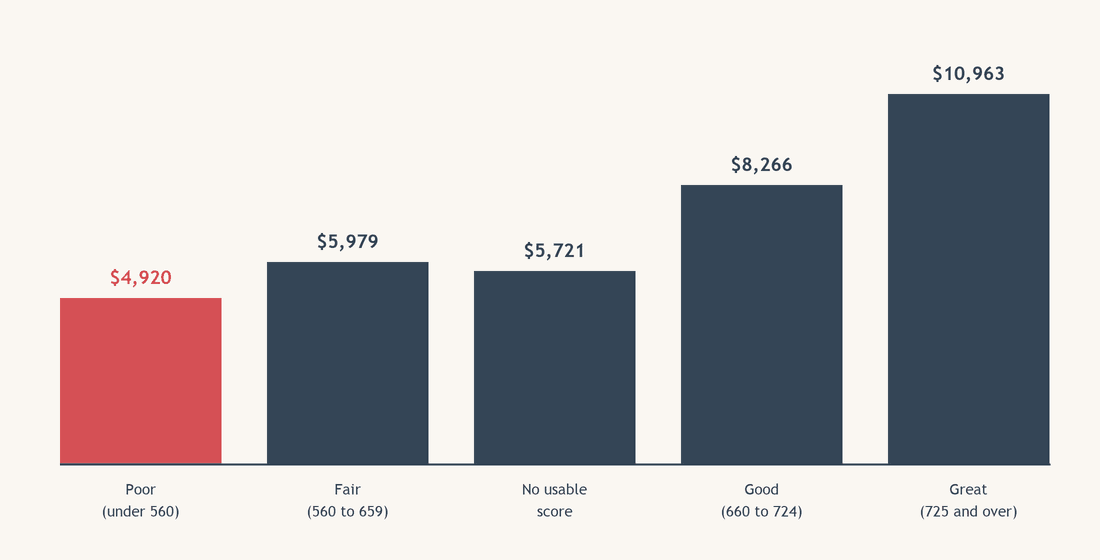
| Credit band | Share of personal applicants | Average request |
|---|---|---|
| Fair (560 to 659) | 46.3% | $5,979 |
| Poor (under 560) | 23.6% | $4,920 |
| No usable score | 22.1% | $5,721 |
| Good (660 to 724) | 6.7% | $8,266 |
| Great (725 and over) | 1.3% | $10,963 |
Source: Smarter Loans platform data, personal loan applications of $1,500 to $35,000, January 2026 to June 2026. We do not record whether an application carried a guarantor or co-signer, so the table is for all applications.
A guarantor helps in three cases. When your income is below a lender's floor and the guarantor's is not. When your file is empty rather than damaged, as a student's or a newcomer's is, and the lender wants a file to read. And when the amount is larger than your deposits support alone. It helps least where most people reach for it: a damaged file with a decent income, because the lender is pricing your history, and a guarantor does not change your history.
The test before asking anyone: apply alone first. If the answer is no, or the rate is at the cap, then ask; if the answer is yes at a rate you can carry, the guarantor's signature buys nothing and risks a great deal.
What it saves. A guarantor who moves a file from the top of a lender's range to the middle saves real money. On $5,000 over 24 months, 29.99% APR costs about $1,710 in interest and 19.99% costs about $1,108; the signature is worth about $600. On a larger amount or a longer term the saving grows. The personal loan calculator prices any amount at any two rates.
What it can cost the guarantor. Everything. A missed payment reports on their file as well as yours. A default is their debt in full. And while the loan is open, it counts against them on every application they make, because a lender reading their file sees a contingent liability the size of your balance. A parent guaranteeing $5,000 for a child may find their own next car loan priced as though they had borrowed it.
The words are used loosely and the difference matters.
A co-signer is a joint borrower from day one: both names on the loan, both incomes assessed, both responsible from the first payment. Most lenders that accept a second applicant mean this.
A guarantor in the strict sense signs a separate guarantee and is called on only after the borrower defaults. Fewer these lenders offer it in that form. The difference is when the liability starts, not whether it exists.
Either way, the second person should read the agreement as though it were their own loan, because in every way that counts it is. The Financial Consumer Agency of Canada's guidance on what to consider before borrowing sets out the obligations any borrower takes on; a guarantor takes on every one of them without receiving the money.
Seventeen lenders offer personal loans from $15 to $35,000 unsecured, from 0% APR up to the 35% federal cap on instalment loans, on terms to 84 months. Minimum income runs from $1,000 to $2,500 a month from any regular source, most commonly $1,500. Ten publish funding within 24 hours.
A second applicant is read the same way as the first: regular deposits, existing commitments, the score. Two regular incomes on one application is the strongest file most these lenders see. One regular income and one guarantor with a damaged file is weaker than the first income alone, which is the other thing to check before asking: a guarantor with bad credit can pull an application down.
If someone is going to sign for you, three things make it survivable for both of you.
Size the loan to the need and the term to the shortest you can carry; every extra month is a month their file carries your balance. Set up the payment as an automatic debit on the day after your income lands, so the question of a missed payment never reaches them. And agree in writing, between yourselves, what happens if you cannot pay: whether you tell them before the due date, whether they cover it and you repay them, whether the loan is refinanced into your name alone once your file supports it. The credit building loans page covers how to get there; most guaranteed loans should be refinanced solo within a year.
One more thing worth saying to the person signing. Ask the lender, in writing, whether the guarantee is for this loan alone or for any future borrowing by the same person, and whether it ends when the loan is repaid or must be released separately. Some guarantee agreements are continuing; a guarantor who signed for a $3,000 loan in 2024 can find themselves liable for a $9,000 refinancing in 2026 without a second signature. A guarantee should name one loan, one amount, and an end date, and a lender that will not put that in writing is telling you something.
All personal loan options are on the personal loans hub. If the obstacle is your credit history rather than your income, the bad credit loans page covers what these lenders lend on one file; if it is an empty file, the newcomer loans page and the student loans page cover the two common cases.
Source for all platform figures: Smarter Loans personal loan applications, January 2026 to June 2026.
Reviewed by Rafael Rositsan, Co-Founder and CEO, Smarter Loans. Last reviewed 9 September 2026. Platform figures cover applications from 1 January to 30 June 2026.
A personal loan with a second person who promises to repay if you do not. The lender reads two files, and the second one can change the decision, the amount or the rate. The guarantor is a borrower in waiting: if the payments stop, the debt is theirs in full, on their credit file.
Usually not. Twelve of the seventeen lenders consider a poor score on one file, and all read deposits before the score. A guarantor helps most where your income is below a lender's floor or your file is empty rather than damaged. Apply alone first; ask someone to sign only if the answer is no or the rate is at the cap.
On $5,000 over 24 months, moving from 29.99% to 19.99% APR saves about $600 in interest. The saving grows with the amount and the term. Against that, the guarantor carries your balance on their own file for the life of the loan, and a missed payment reports on both.
A co-signer is a joint borrower from the first payment, both names on the loan and both incomes assessed; most lenders mean this. A guarantor signs a separate guarantee and is called on only after default. The liability exists either way; the difference is when it starts.
No, and it can hurt. A lender reads the second file as it reads the first, and a damaged second file pulls the application down rather than up. A guarantor helps when their income and history are stronger than yours, not merely when they are willing.