




Understanding your loan options can feel overwhelming, especially as a small business owner in Canada. With so many options, personal loans, business loans, lines of credit, government programs, and online lenders, it’s important to understand what’s available and how each one works. Choosing the right type of financing can help your business grow, manage cash flow, or cover unexpected expenses, while the wrong choice could create unnecessary stress or debt.
So with that being said, let’s take a look at the main loan options available to Canadians in 2025, explain how they work, and highlight when each might make sense for your business or personal needs.
Quickly calculate what you’ll owe with our income tax calculator.
Understanding the Different Types of Loans in Canada
Personal Loans
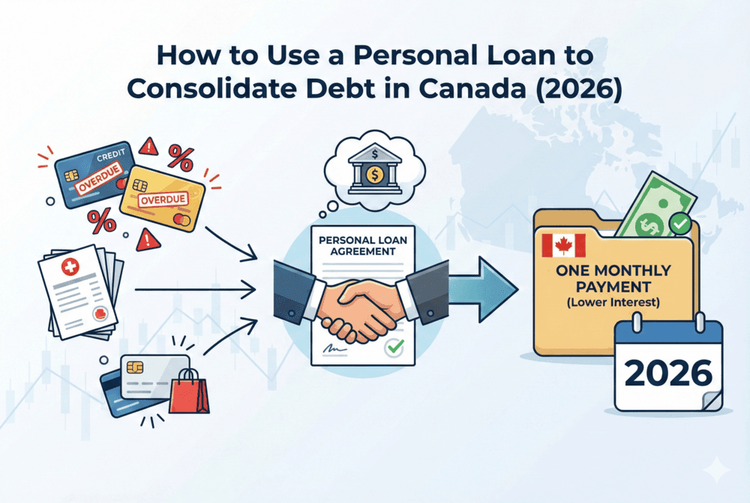
Personal loans are unsecured loans based on your income and credit history, meaning you don’t need to put up assets like your home or car. They’re ideal for one-time expenses such as consolidating high-interest debt, covering medical bills, or funding a major purchase. Repayment is usually fixed over a set term, giving you predictable monthly payments. While convenient and quick to access, personal loans can have higher interest rates than business loans, especially if your credit isn’t strong. They’re best used for personal or small-scale needs rather than ongoing business expenses.Business Loans
Business loans are designed specifically for entrepreneurs and small businesses. They can be used for expansion, equipment purchases, inventory, or managing cash flow. Approval depends on your business’s revenue, credit history, and financial plan, and these loans often offer larger borrowing limits and lower interest rates than personal loans.Government-Backed Loans
Government-backed programs, like the Canada Small Business Financing Program, make it easier for startups and growing businesses to access affordable capital. These particular loans are partially guaranteed by the government, which reduces personal risk and makes it easier to qualify even if your business is new or has limited credit history. They can be used for equipment, expansion, or working capital and often come with favorable interest rates and repayment terms.Lines of Credit
A business line of credit gives you access to funds as needed, charging interest only on what you use. This flexibility is perfect for managing seasonal expenses, cash flow gaps, or unexpected costs. Lines of credit can be secured or unsecured, with limits based on your business revenue and credit.Alternative Lenders
Online lenders and alternative financing options offer fast access to funds, often with simpler application processes than traditional banks. Such loans can be used for short-term cash flow needs, equipment, or working capital, though interest rates are typically higher. Merchant cash advances and invoice financing fall into this category, providing funds based on future sales or outstanding invoices. While convenient and speedy, these options should be used strategically to avoid high costs. They’re particularly useful for businesses that may not qualify for traditional loans or need quick access to capital.Personal Loans: When and How to Use Them
A personal loan is a fixed-sum loan that you borrow from a bank, credit union, or online lender and repay in regular installments over a set period. In Canada, such loans are often used for consolidating high-interest debt, covering unexpected expenses, or funding one-time purchases. They typically have fixed interest rates and predictable repayment schedules, which makes budgeting simpler.They differ from business loans as personal loans rely on your individual credit and income rather than your company’s financials. While they can be a quick way to access funds, it’s important to use them strategically. Using a personal loan for ongoing business costs or long-term investments can put your personal finances at risk. They work best for short-term, well-defined needs where you can comfortably manage repayments without affecting your credit.
Business Loans: Funding Growth and Expansion
A business loan is a financing option designed to help Canadian entrepreneurs grow and manage their companies. They can be used for a variety of purposes, such as purchasing equipment, expanding operations, hiring staff, or managing cash flow during seasonal fluctuations. Business loans often come with flexible repayment terms, higher borrowing limits, and interest rates that reflect your company’s creditworthiness. Using a business loan strategically allows you to invest in growth without putting personal assets at risk.Government-Backed Programs and Grants for Entrepreneurs
Government-backed programs and grants can be a game-changer for Canadian entrepreneurs. Programs like the Canada Small Business Financing Program or regional development initiatives provide access to affordable loans with lower personal risk. Grants, on the other hand, give funding that doesn’t need to be repaid, making them perfect for startups or businesses investing in innovation, training, or expansion.These programs often have specific eligibility criteria, so it’s important to understand the requirements and deadlines. They can help you secure funding that might not be available through traditional loans, while also supporting long-term business growth.
Government programs for entrepreneurs
Canada Small Business Financing Program (CSBFP)
The Canada Small Business Financing Program (CSBFP) facilitates access to loans for small businesses by sharing the risk with lenders. This program assists in purchasing or improving land or buildings for commercial purposes, acquiring equipment, and making leasehold improvements. Eligible businesses can secure loans up to $1 million, with a portion of the loan guaranteed by the federal government.Canada Summer Jobs (CSJ)
Canada Summer Jobs (CSJ) is a government initiative that provides wage subsidies to small businesses hiring young Canadians aged 15 to 30 for the summer season. This program helps employers offset the cost of hiring students, allowing them to gain meaningful work experience while supporting the business's staffing needs during peak months. Eligible employers can receive up to 100% of the minimum wage for eligible hires, so it’s a cost-effective solution for seasonal staffing requirements.Business Scale-up and Productivity (BSP)
The Business Scale-up and Productivity (BSP) program offers funding to high-growth Canadian small and medium-sized enterprises (SMEs) aiming to expand and enhance productivity. This program provides repayable or non-repayable contributions covering up to 50% of eligible costs, ranging from $125,000 to $10 million. It targets businesses with at least three years of profitable operations and focuses on large-scale expansion and modernization initiatives. The BSP program supports the growth of innovative firms, contributing to Canada's economic development.Innovative Solutions Canada (ISC)
Innovative Solutions Canada (ISC) is a government program that provides competitive grants and procurement contracts to help businesses solve innovation challenges for the federal government. The program is structured in phases, with Phase 1 offering grants up to $150,000, Phase 2 up to $1 million, and Phase 3 providing procurement contracts with no cap. ISC aims to foster innovation by supporting Canadian businesses in developing solutions that meet federal government needs, thereby promoting technological advancement and economic growth.Mortgages and Home Loans in Canada
Buying a home is the largest borrowing most Canadians ever do, and it is the one loan type this guide has not covered yet. A mortgage lets you buy the property now and repay over a long horizon, and the three things that decide what it costs you are the rate, the term, and the amortisation. The term is how long the current contract runs, commonly five years. The amortisation is how long the whole debt takes to clear, commonly twenty-five. You will renew several times across one amortisation, at whatever rates exist on each renewal date.Fixed-rate mortgage
The rate is locked for the full term, so the payment does not move. It suits borrowers who want certainty and want protection against rate increases during the term.Variable-rate mortgage
The rate tracks the lender’s prime, which moves with the Bank of Canada’s policy rate. It often starts below the equivalent fixed rate, and it can rise or fall during the term — so the saving is real but it is not guaranteed.Open mortgage
You can repay or refinance any amount at any time without a prepayment penalty. That flexibility is priced in, so open mortgages carry higher rates. It suits someone expecting to sell, or to come into money, before the term ends.Closed mortgage
The rate is lower, but repaying early — including on a sale or a refinance — triggers a prepayment charge. It suits a long-term owner who wants the cheapest rate and does not expect to break the term.Down Payment and Default Insurance
What you can borrow depends on your income, your debt ratios and your credit. The size of your down payment then decides something separate: whether the mortgage needs default insurance. Below the regulated threshold, the mortgage must be insured — through CMHC, Sagen or Canada Guaranty — which protects the lender if you default and adds a premium to what you pay. The minimum down payment and the insurable price cap are both set by regulation and have been changed more than once in recent years, so check the current figures against CMHC rather than any secondary summary, this one included.How to Choose the Right Loan
With every option on the table, the choice comes down to six questions. Work through them in order: What is the money actually for? Match the horizon of the loan to the horizon of the need. A short, defined expense is personal-loan territory. A property or a multi-year business investment is not. What does it cost in total, not per month? Compare on annual percentage rate so fees are inside the number, and then look at total interest across the full term. A small rate difference compounds into a large one over a long amortisation. How long should the term be? Shorter terms cost less overall and more each month. Pick the shortest term whose payment you can meet in a bad month, not an average one. What are the fees? Origination, administration and early-repayment charges are where two identically-priced offers stop being identical. Ask for them in writing before you sign. Where does your credit stand? Your score sets both your eligibility and your rate. Check it before you apply, not after a declined application has already cost you an inquiry. Who is the lender? Confirm they are licensed to lend in your province, read recent customer reviews, and check how they handle support. The moment you need to renegotiate a payment is the wrong moment to find out.Conclusion
Figuring out the loan landscape in Canada can feel overwhelming, but understanding your options makes a huge difference. Each option comes with its own benefits, risks, and repayment terms, so taking the time to evaluate them carefully will help you make informed decisions that support growth without unnecessary stress.Pro tip: the goal is to find funding that works with your cash flow, protects your personal credit, and aligns with your business strategy. With clear guidance and reliable resources, you can confidently choose the right loan and position your business for success in 2025 and beyond.

 Written by:
The Smarter Loans Editorial Team produces in-depth, original content to help Canadians navigate borrowing, credit, and personal finance with confidence.